
🚀 3.2.1. Something Big is Happening ::: Atomic Scaling
Feb 13, 2026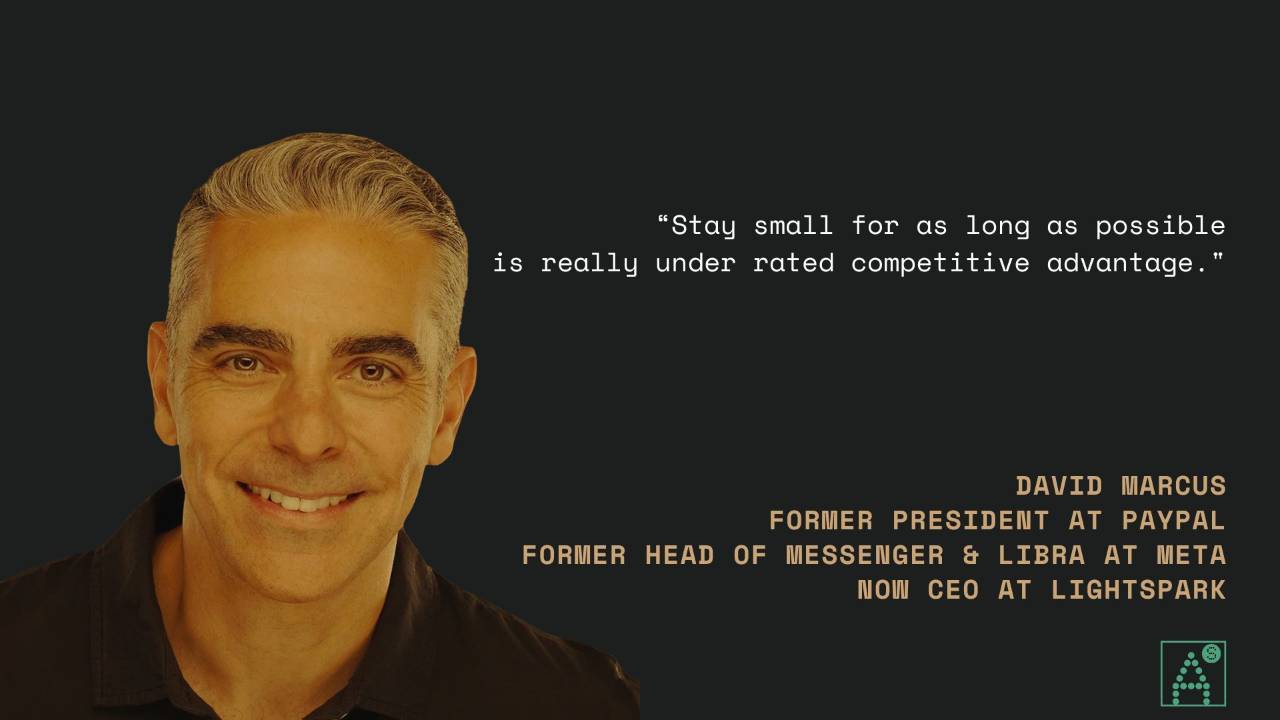
Something big is happening in AI—and most people will be blindsided. 72 hours ago, Matt Shumer (HyperWrite CEO) published an essay that exploded: 74 million views and counting. 34,000 retweets.
His warning? "AI's disruption will be bigger than COVID." Predictably, critics rolled their eyes. "AI hype. Bubble behavior. Fear sells to investors."
Maybe. But one line cut through: "The people I care about deserve to hear what is coming." So here it is.
3 IDEAS FROM ME
I. The ground is shaking.
This is not a drill. It's happening. The reason Matt's essay resonates so much with people in tech: we've already lived through what's coming for everyone else. Six months ago, AI was helpful. Today, it does the work better than we do. One founder I work with, Ted from Sweden put it this way:
"I define exactly what we’re building, documentation, database schema, architecture, deployment. The agents implement it. I supervise, sometimes while playing a game or working on something else, correcting when they drift off course.
Engineering is already shifting from writing code to designing systems. Soon it may be mostly product specification. We are spending more time on the hard parts and less on syntax. The real challenge remains building a profitable business, this increases iteration speed."
⇒ Don't get left behind. The models today are unrecognizable from six months ago. It's not time to panic or critique—it's time to learn. This might be the most important year of your career.
II. AI developed taste.
Matt's moment: "The model had something that felt like judgment. Like taste. The thing people said AI would never have." AI developed taste. The thing we said would always separate humans from machines.
Now add recursive learning. If AI writes 60% of code today, imagine when it learns from itself. Within a year, maybe less. The constraint moved from production to prediction.
=> When you can build anything, the hard part is knowing what to build.
III. Be that most valuable person in the room
There's a brief window—maybe 12 months—where most companies ignore this.
The person who says "I used AI to do this in an hour instead of three days" becomes the most valuable person in the room.
The future is being shaped by a few hundred researchers. That's a lot of power in very few hands. (Probably nothing to worry about. Power is hardly ever abused, yay sure)
⇒ Be that person in the room who learns and shares.
2 QUOTES FROM OTHERS:
I.
“We are heading to an age of 100x productivity with the right tools. Recursive self improvement loops likely go live in the next 12 months. It’s time to recalibrate my gradient on the big picture. 2026 is gonna be insane and likely the busiest (and most consequential) year for the future of our species.”— Jimmy Ba, co-founder of xAI, on announcing he’s leaving the company on X.
II.
“It’s time for my next chapter. It is an era with full possibilities: a small team armed with AIs can move mountains and redefine what’s possible.”— Yuhuai (Tony) Wu, co-founder of xAI, announcing his exit.
1 ACTION FOR YOU:
Like in the Matrix, the future will be bifurcated. My friend David (former PayPal President, VP Messaging at Meta) said something recently that stuck with me: you’ll either own a maximally digital, AI-enabled thing, or a maximally vintage analog thing. Everything in between will live in an undesirable uncanny valley.
So, Red pill or Blue pill?
Ludovic Bodin
3x Entrepreneur, 2x Unicorn Investor, 1x IPO
Founder of BOBIC Generational Wealth
Author of Atomic Scaling
P.S. BE IN MY NEW BOOK! For Atomic Scaling: AI Edition, I'm documenting how small teams + AI build billion-dollar outcomes. Planned case studies:
- Manus AI (Top 3 largest Meta acquisition)
- Gigaverse ($10M ARR, <10 people)
- OnlyFans ($68M per employee)
- Telegram (30 people, billions served)
- XTX Markets (UK's top individual taxpayers with a team of 1-200)
- Tether ($10.1 billion in net profit with a team of 1-200)
- Supercell (Clash of Clans built by 5 people, $10B+ lifetime revenue)
- And others like Lovable, Cursor, SurgeAi, MidJourney, ... pushing asymmetric scale
Each case breaks down:
- Core leverage points (AI, distribution, incentives)
- How team size stayed small while output exploded
- What mattered vs. what looked impressive
Two questions for you:
- What would you most want to learn from these cases? (org design, AI stack, decision velocity, go-to-market, moats, rhythm?)
- Are there other companies—AI-native or not—I should include?
Reply and tell me. I read every response.
P.P.S: Read Matt's full essay here
WHAT THEY ARE SAYING:
“Stay small for as long as possible is really a massively under rated competitive advantage." - David Marcus, former PayPal President, VP Messaging & Libra at Meta, now Co-Founder & CEO of Lightspark
Author


