
🚀 3.2.1. Assess & Tell Me ::: Atomic Scaling
Apr 03, 2026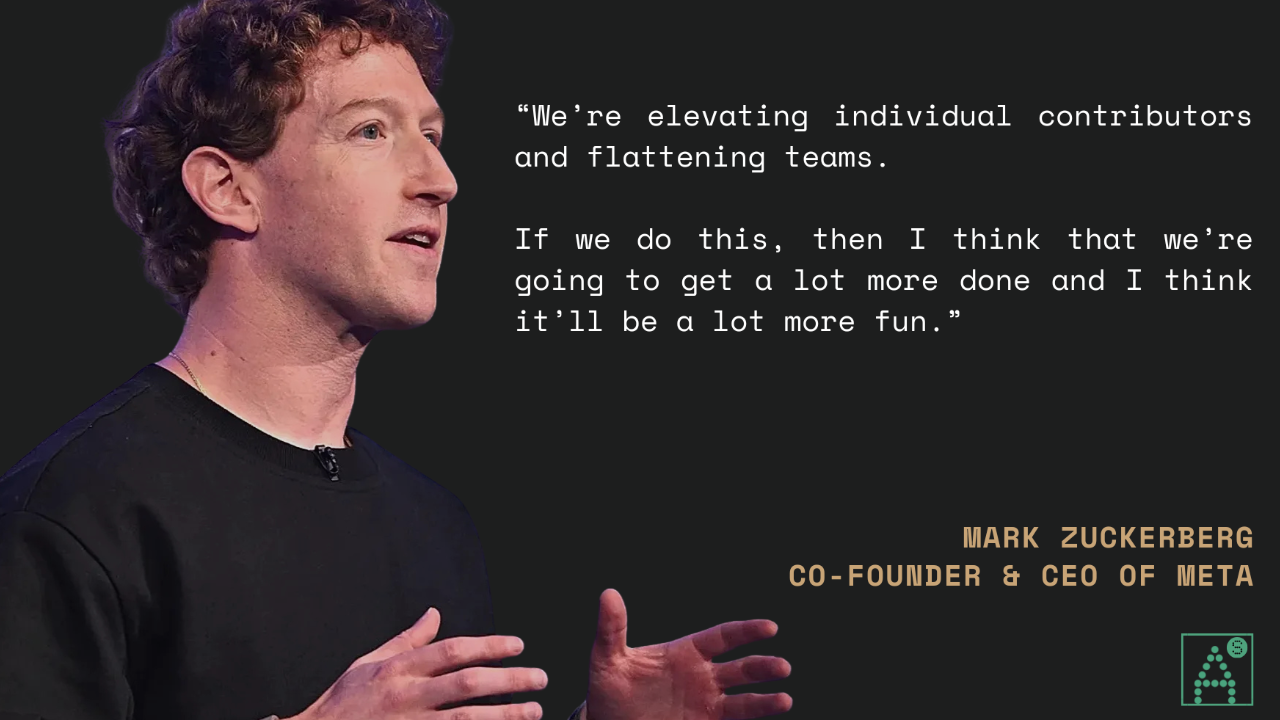
What actually happened at 9:09am... Max typed four words into Discord: "Cassandra, current project status."
By 9:11am he had a complete brief. What shipped. What's blocked. What's missing before go-live. No standup. No Slack thread. No human in the middle.
This is FV — a company I co-founded — running in production, this morning. The system making it possible is called HAAO: Human-Assisted Autonomous Organization. Here's what it means in practice.
3 IDEAS FROM ME
I. The Assess layer is the only place to start
Before you can remove a management layer, you have to make the company's reality machine-readable. At FansVine that means GitHub, AWS, Claude, OpenRouter, Discord — every artifact, every PR, every code change, every system state, indexed and queryable from a Command Line Interface rather than a web browser.
Cassandra, our AI agent, runs on top of that stack. She monitors three subsystems continuously, and returns a decision-ready brief.
Most founders skip this step. They deploy agents on top of chaos and wonder why outputs are unreliable. The Assess layer is unglamorous. It is also the only thing that makes everything else work. Build it first.
II. Middle management was always an information problem
Hierarchies weren't designed to create value. They were designed to move information up and down an org without losing signal. That's the entire job. AI does it faster, cheaper, and without political distortion.
The question isn't whether to restructure. It's how fast you can make every person in your company operate with the same context as the CEO. The mechanism is now available.
The constraint is organizational will and discipline to continuously maintain structured documentation with clear pathways, like a living table of contents for a reference manual.
III. The Tell Me pattern — one prompt, one next step
The discipline is not technical. The discipline is human.
Instruct the agent once. "Tell me what's missing from go-live on Max's side." It retrieves, synthesizes, responds — at 9am the same as at 1am, with the same precision and zero bad days.
The only rule: never ask a question you're not ready to act on. If you're asking Cassandra for status and then sitting on it, you've built an expensive dashboard. The value is in the decision that follows. Always.
2 QUOTES FROM OTHERS:
I.
"The best managers figure out how to get great outcomes by setting the context, not by controlling their people." — Reed Hastings, Co-Founder of Netflix. Author of "No Rules Rules"
II.
"We’re questioning the underlying assumption that organisations have to be hierarchically organised with humans as the coordination mechanism. Instead, we intend to replace with AI what the hierarchy does.” - Jack Dorsey, Block & Roelof Botha, Sequoia (watch more here)
1 ACTION FOR YOU:
Pick one recurring status question—e.g., “are all systems live and running?” Build the Assess layer around it. Deploy a single agent. Run it, learn from it.
A founder operating above the noise moves 2× faster than one still routing information through people.
Ludovic Bodin
3x Entrepreneur, 2x Unicorn Investor, 1x IPO
Founder of BOBIC Generational Wealth
Author of Atomic Scaling
P.S. Mark Zuckerberg is building a CEO AI agent for himself. I built one for every founder who can't afford to wait.
Atomic Scaling OS runs on Anthropic Claude. Gary Tan open-sourced Gstack for building products faster — this is the operating layer on top: how you work together as a team in the era of AI and go to market. Same philosophy, different surface area.
It's live and open-source on GitHub. If you're running lean and want the unfair advantage early
-> Atomic Scaling OS on GitHub. Go fork it, build on it. Have fun with it.
Author


