
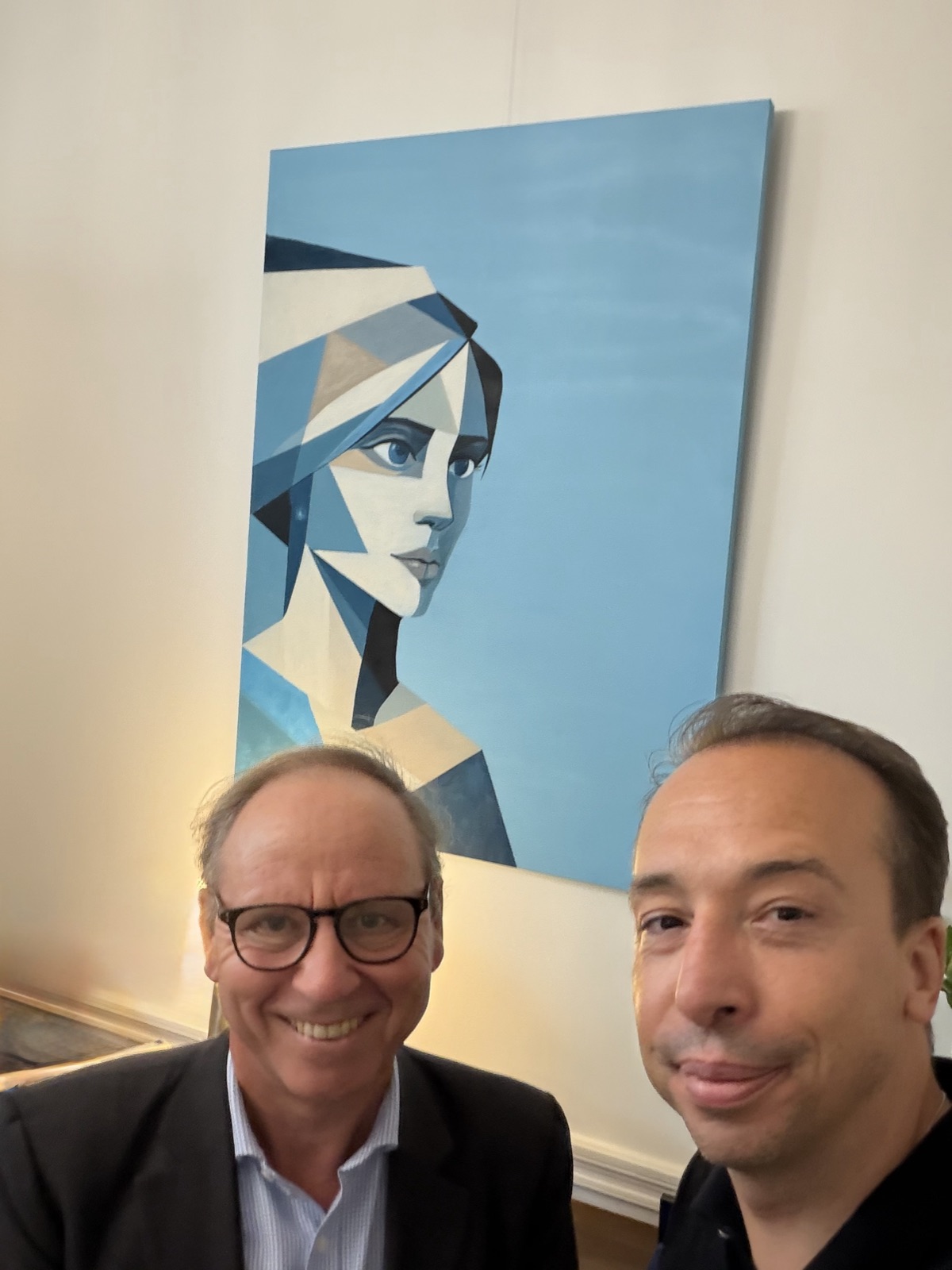
For as long as I can remember, I have been a creator. I had an idea and turned it into a website, a software, a marketplace, a company, a video game, a book, a painting, a song, you name it.
The idea was always the easy part. Turning it into something real was brutally hard. It usually took a team and months of work before anyone could touch the thing.
That era is over. I took a game I built with a team of four five years ago and remade it in a week with AI. Ten times better.
And yet the difficulty of creating has not disappeared. It has simply moved.
THREE IDEAS:
I. Taste no longer gets shared. It concentrates.
The quiet beauty of a team is that taste circulates. You argue about a color, a mechanic, a loop, and the work absorbs the average of everyone’s judgment.
You could argue AI already has better taste than most people. It is, after all, distilled from millions of makers. Maybe. But that misses the point. When the team is gone, YOU are the final judge. Every time. AI will produce exactly as well as you can tell good from almost-good.
Your output is now capped by your discernment, not your capacity.
II. Use the new tools to build the taste, not just the thing.
Taste is the compressed, wordless verdict you reach faster than you can justify it.
When I paint, I keep discovering that the painting is an idea my brain had not yet managed to say out loud. The hand knows before the mouth does.
I am making a new game right now. Not because I expect it to be the one-man unicorn or the next farming hit on Steam (I secretly hope). I am making it because it is a whetstone, that thing that sharpens the mind or a skill. The game is the excuse. The judgment is the product.
III. Where does taste actually come from?
Not from consuming good work. I’ll say that plainly, because it is the most expensive lie in creative life.
You cannot walk through the best museum in Paris and come out a painter, any more than you become a chef by eating at Michelin-starred restaurants, or a game designer by playing every top title on Steam or iOS.
Taste is built the slow, stupid, humiliating way. You make something bad, ideally in public. You make it as beautiful and as pure as you know how, and it fails in front of you anyway. So you paint it again. Or you start the next project the morning after shipping what you were certain was your masterpiece.
Do that enough times and something shifts. You start noticing the color, the VFX, the sound, the animation loop, the sequencing. Nobody taught you. The failures did.
TWO QUOTES:
I.
“The friction was not an obstacle to developing taste. The friction was the curriculum.” — Raf “NotAShelf” (great post on Hacker News here)
II.
“In a world where anyone can make anything, what matters is your ability to choose and curate what you make.” — Jenny Wen, Head of Design at Cursor
ONE ACTION FOR YOU:
Everyone can now make anything. Almost no one can tell you what is worth making.
What is the one thing you can make this week — not watch, not read, not save for later — to sharpen your judgment?
Play to Win!
Ludovic Bodin
3x Entrepreneur, 2x Unicorn Investor, 1x IPO
Founder of BOBIC Generational Wealth
Author of Atomic Scaling